My Essential Winter Packing List for Ski Trips
I have a running note in my phone called “Ski Bag” that I update every single season, because apparently two decades of doing this hasn’t stopped me from forgetting something if I try to pack from memory alone. Between digging Luke’s hockey gear out of the mudroom and squeezing in one more showing before we hit the road, our packing always happens in the same frantic fifteen minutes before we leave. This list is basically that phone note, cleaned up so you don’t have to build your own from scratch.
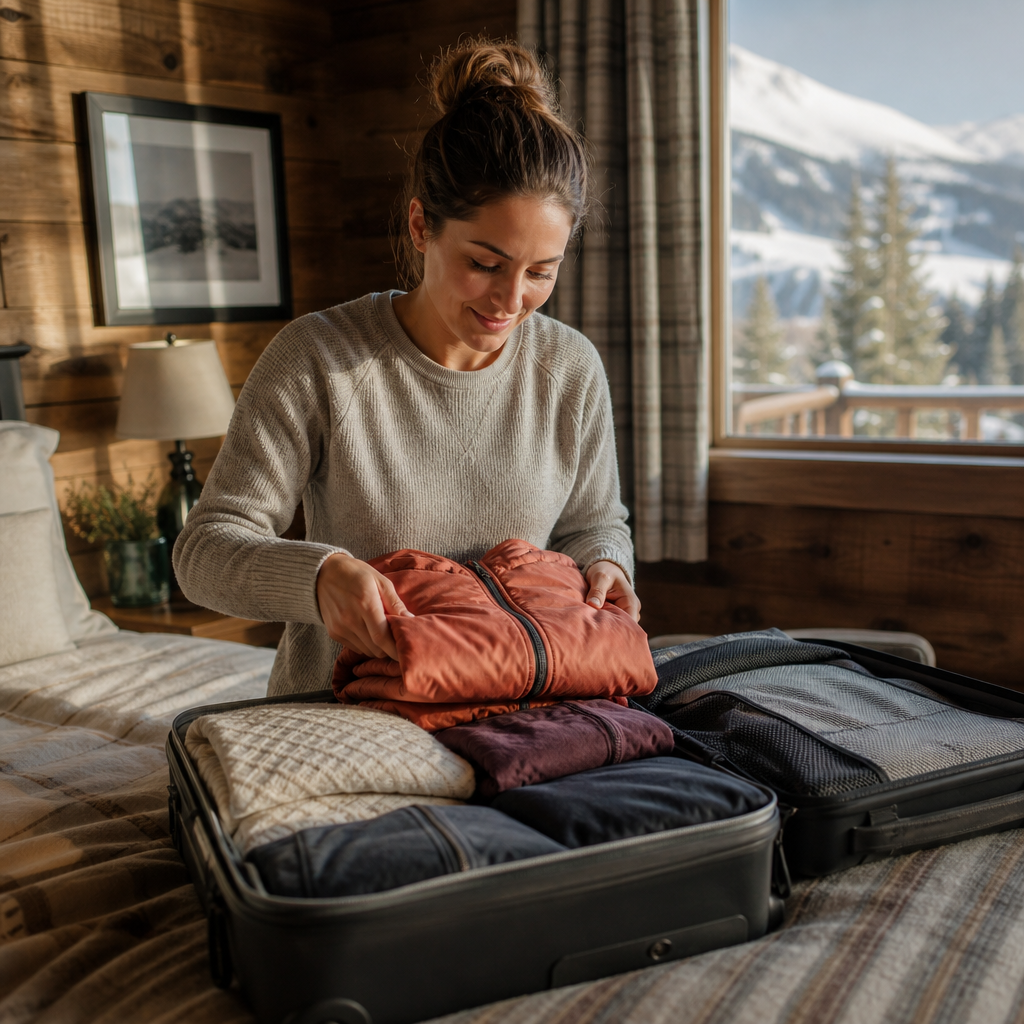
This expanded guide breaks down not just what to pack, but why it matters, how to layer it, and the little tips that make winter travel easier.
This website contains affiliate links. As an Amazon Associate, I earn from qualifying purchases at no additional cost to you.
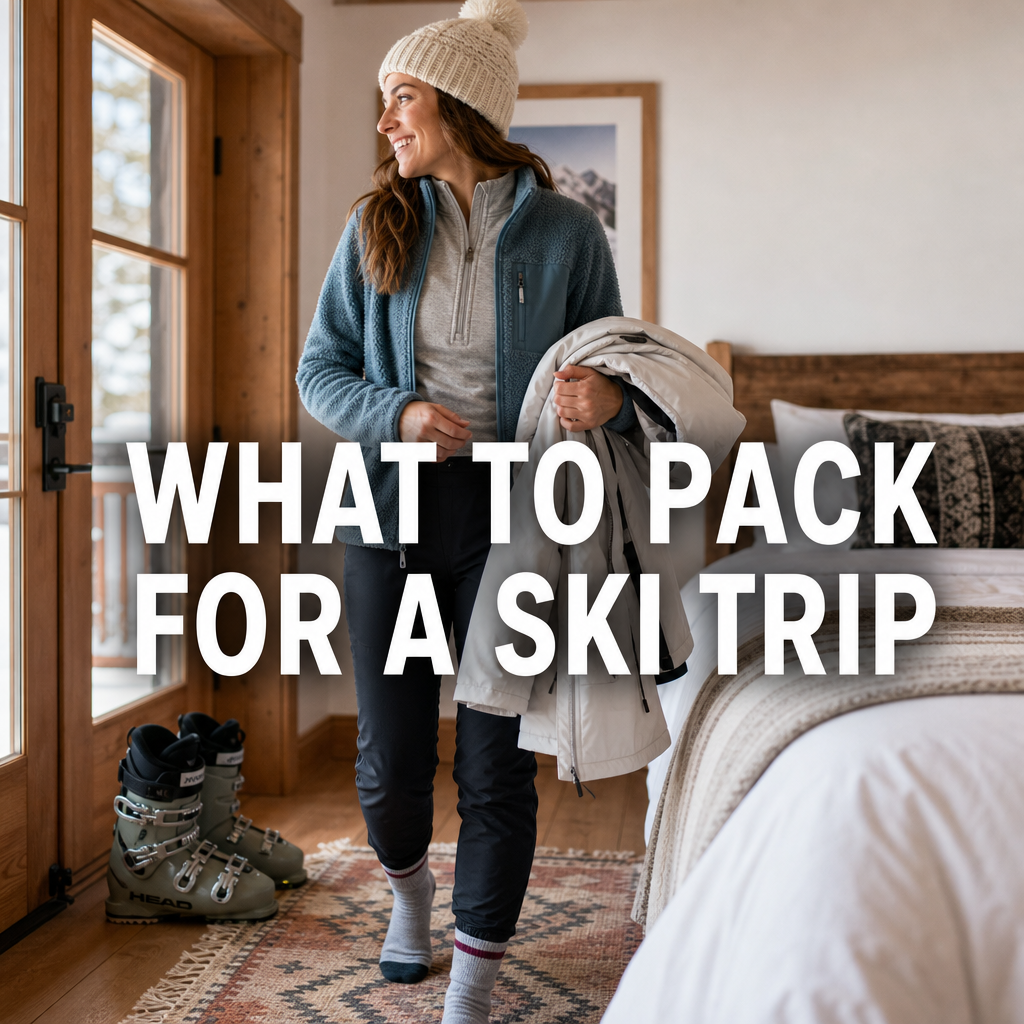
What to Pack for Ski Days
This is your performance section—the pieces that decide whether you stay warm and dry… or call it quits by lunchtime.
Base Layers
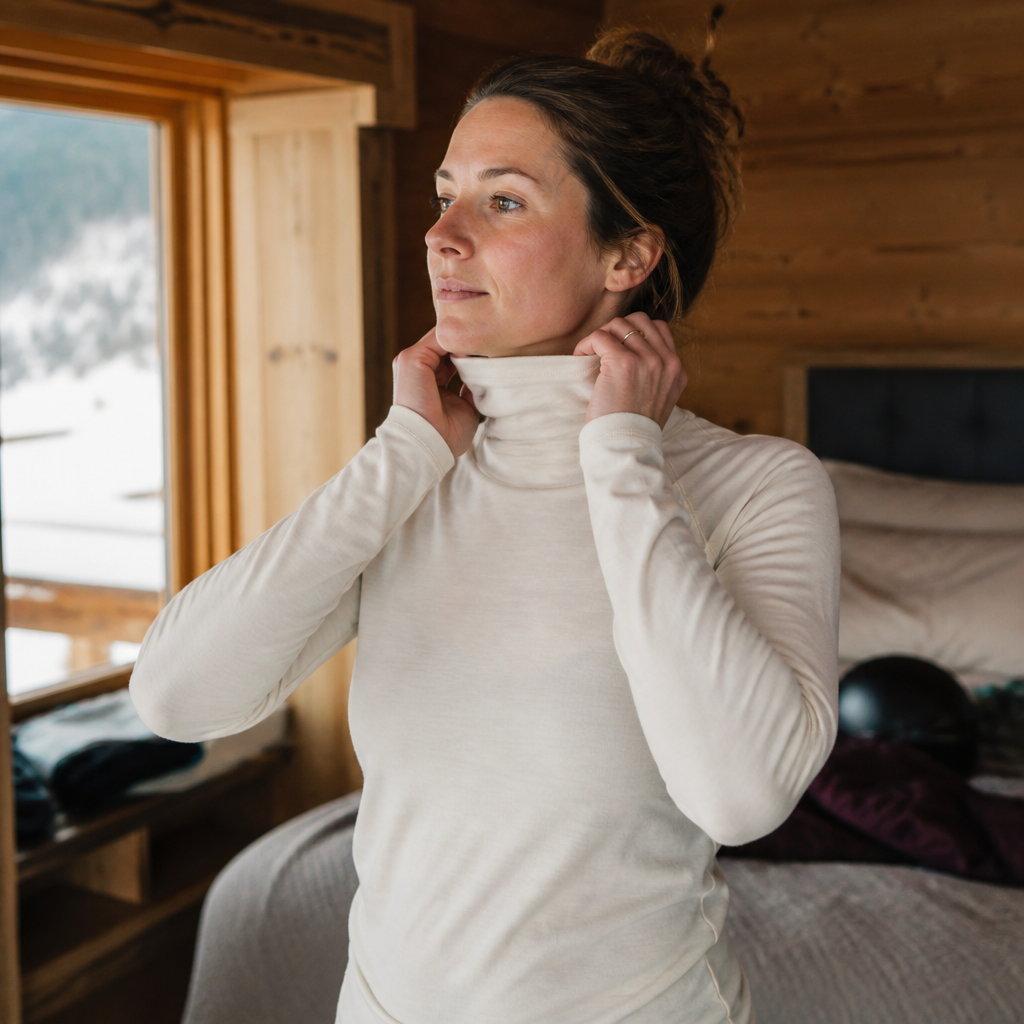
These should feel like a second skin, wicking sweat away instead of trapping it.
• Merino-wool base layer tops are warm, breathable, and naturally odor-resistant—great for multi-day use.
• Synthetic base layers are budget-friendly and dry quickly if you sweat or get snow down your jacket.
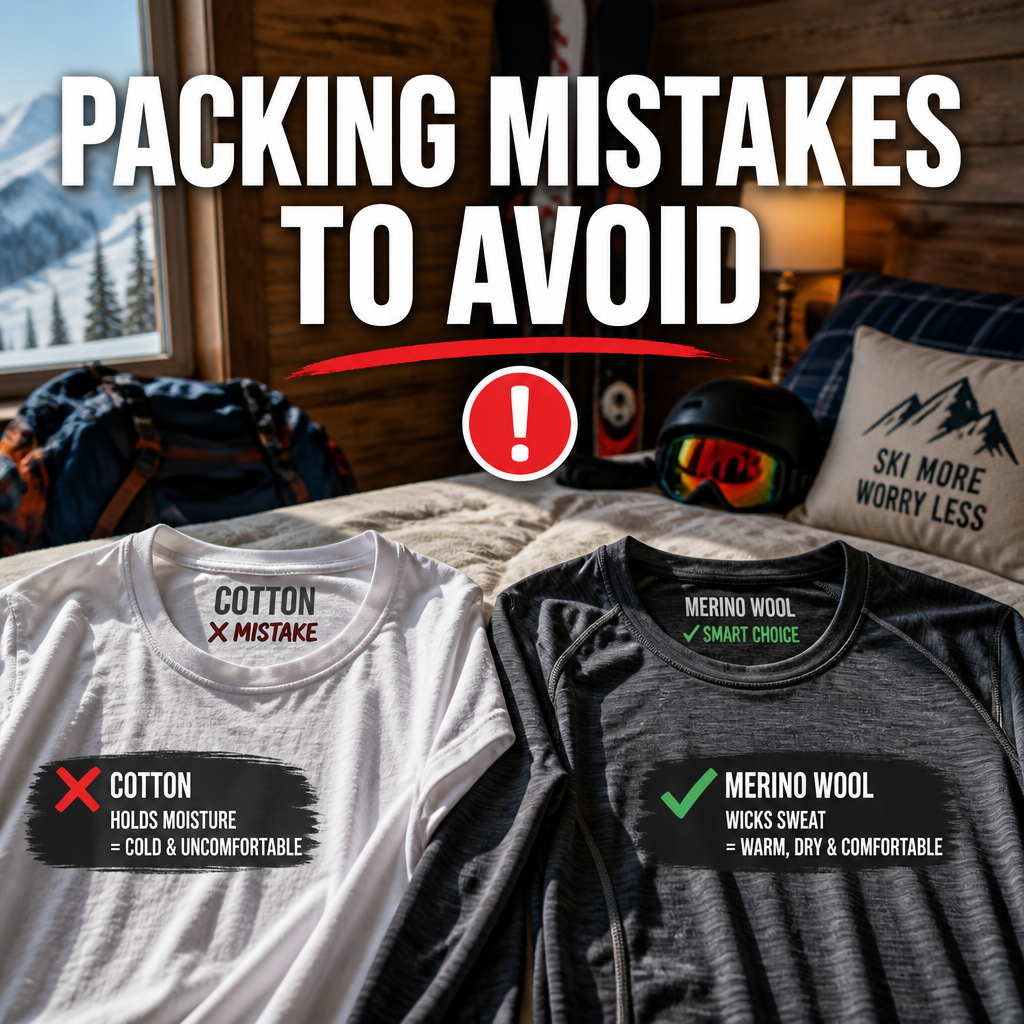
• Avoid cotton; it soaks, freezes, and stays wet all day. I made this mistake exactly once, early on, and spent an entire afternoon on the mountain with a cold, damp back—never again.
Mid Layers
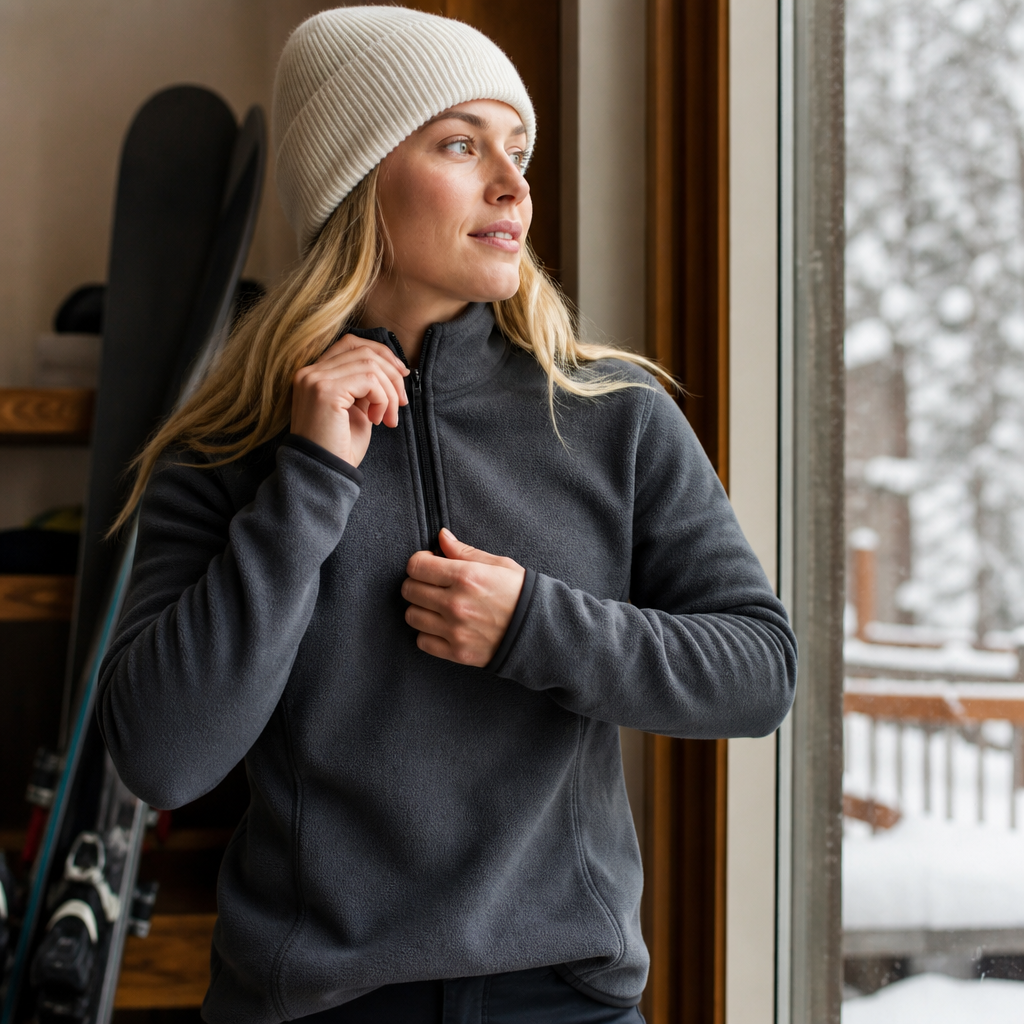
Your mid layer provides insulation without bulk.
• Fleece half-zips, grid hoodies, or slim synthetic puffers all work well.
• On very cold days, stack two layers—fleece plus a light insulated vest.
• Look for styles that zip so you can adjust heat easily on the lift.
Ski Jacket
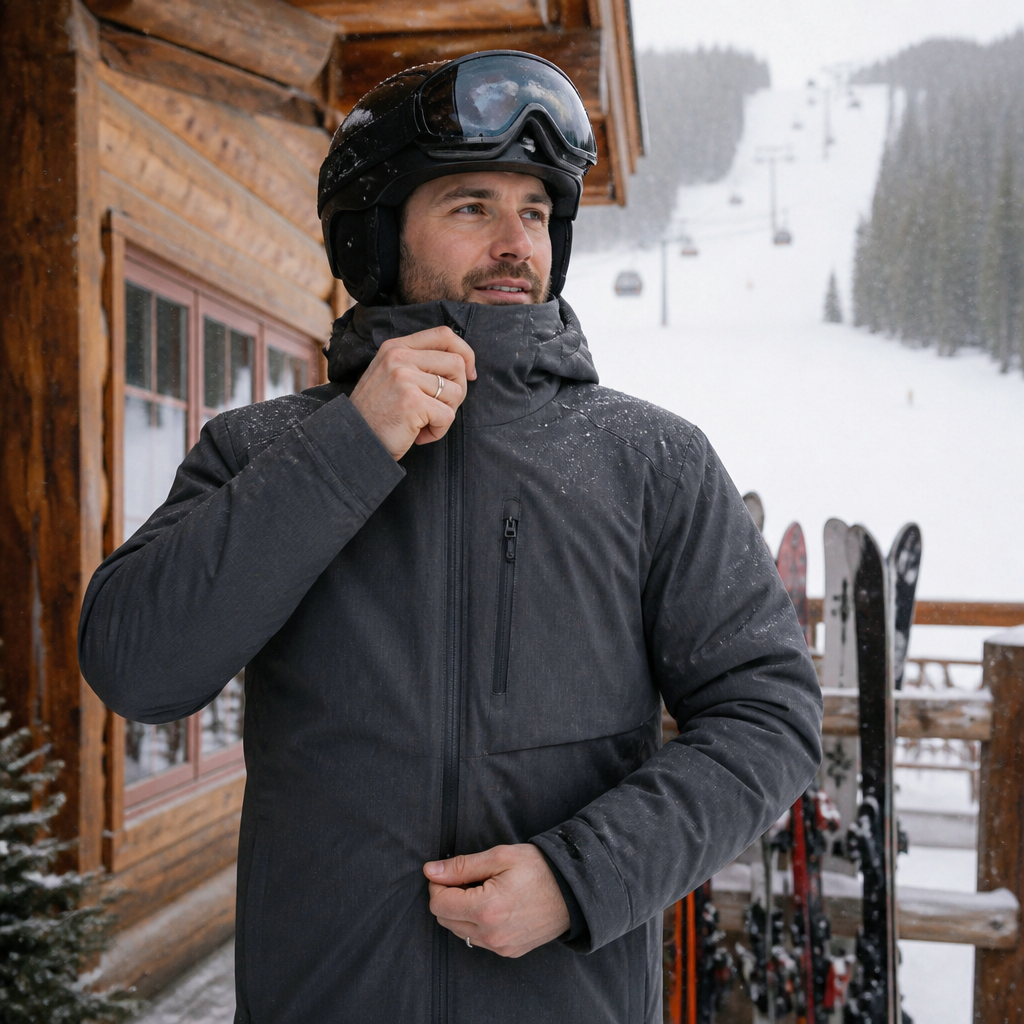
The outer shell that shields you from wind, snow, and temperature swings—and honestly, mine gets worn just as often walking clients through a ski-in listing as it does on the actual mountain.
• Insulated ski jackets are great for cold climates.
• Shell jackets are lighter and let you build warmth with layers.
• Make sure it has a powder skirt and wrist gaiters.
Ski Pants or Bibs
Bibs are worth it—warmer core, no snow sneaking in.
• Look for waterproof ski bibs rated 10 k or higher.
• Run cold? Choose insulated ski pants.
• Run hot? Go with a shell pant plus warm base layers.
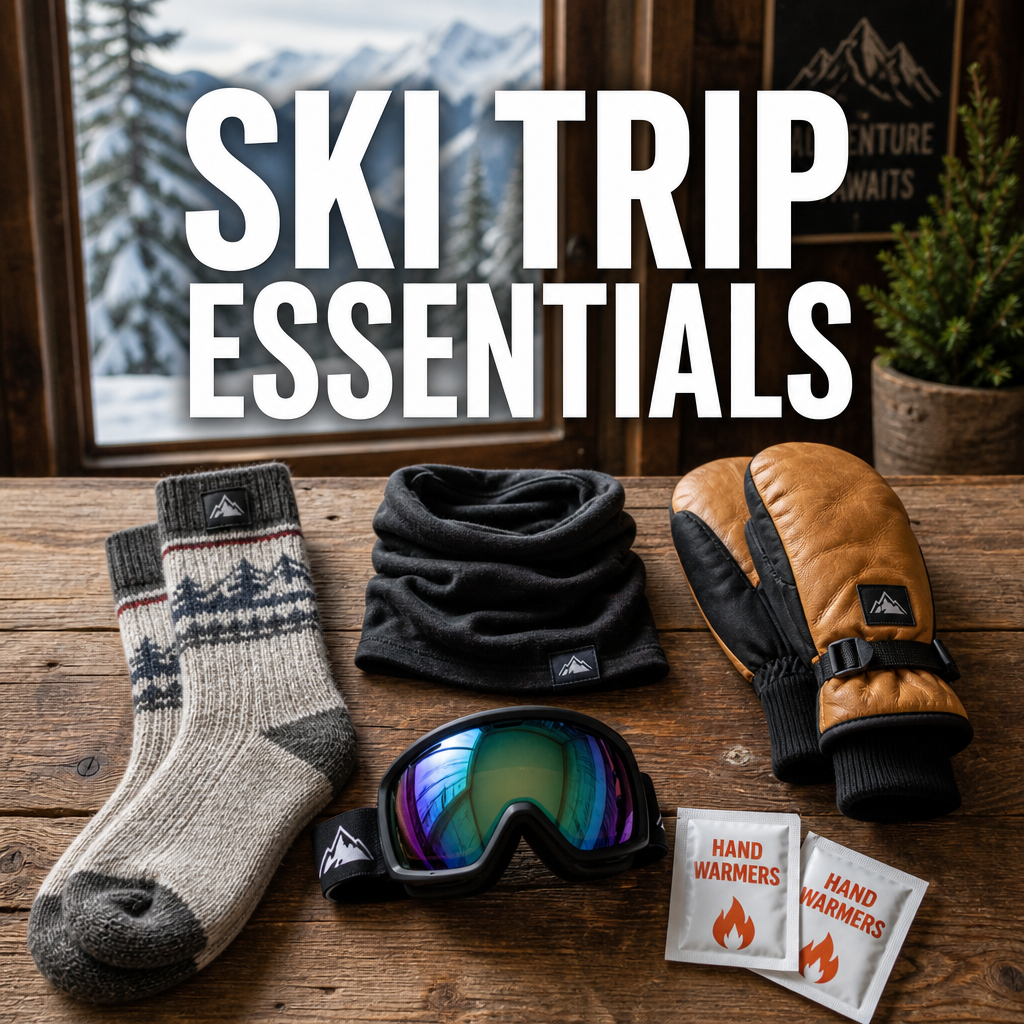
Wool Socks
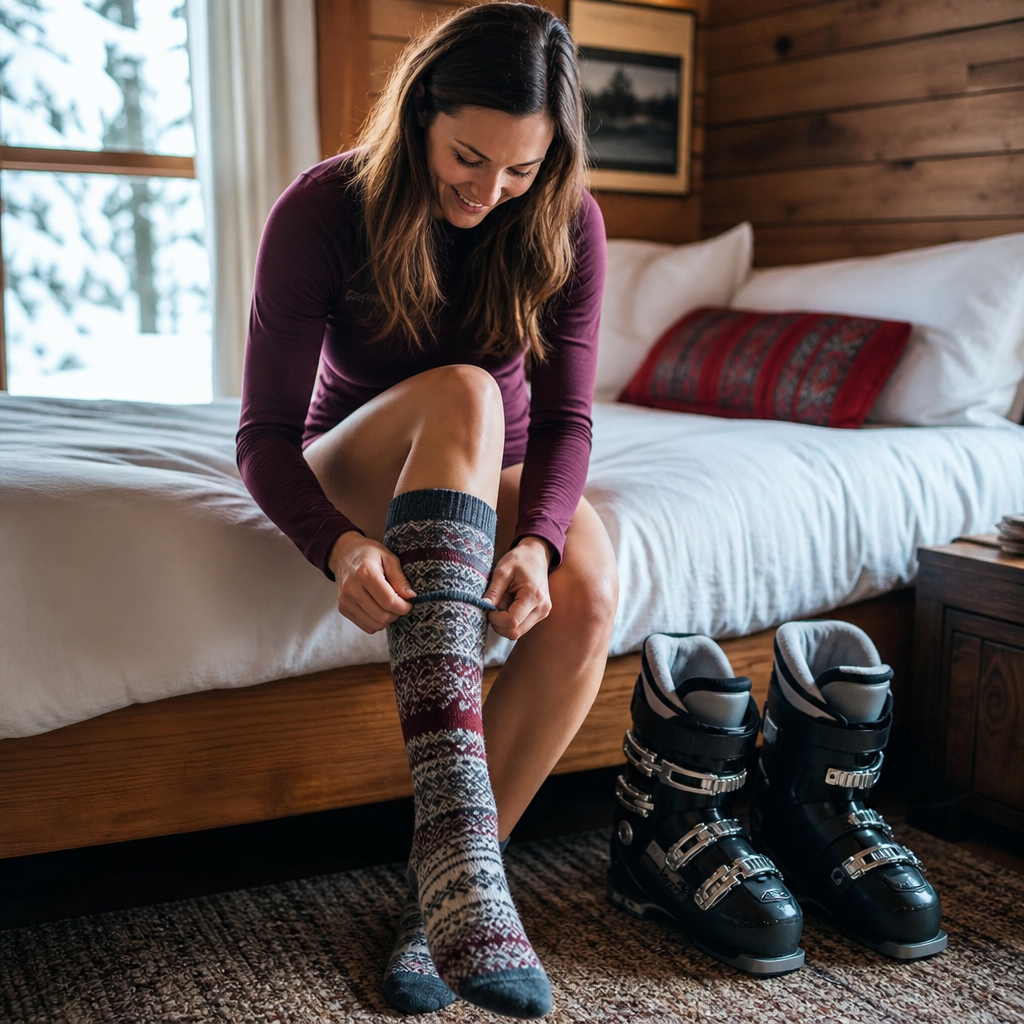
One fresh pair per day. Luke figured this rule out the hard way at hockey practice long before I applied it to skiing—cheap socks ruin a good day faster than almost anything else in your bag.
• Lightweight merino ski socks stay warm without bunching.
• Never double up; it cuts circulation and makes feet colder.
Neck Gaiter or Buff
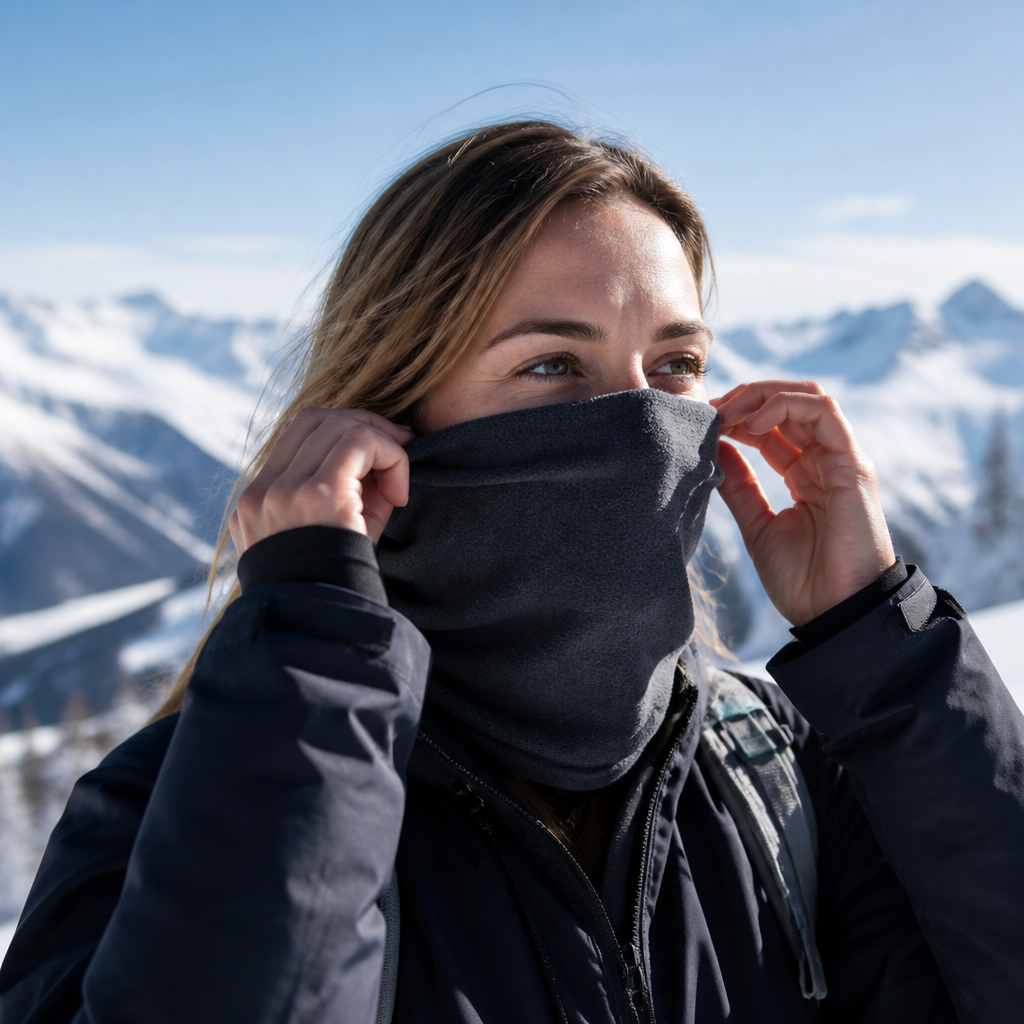
Protects your face from cold wind and harsh reflection.
• Fleece neck gaiters for sub-zero days; lightweight buffs for warmer afternoons.
Gloves or Mittens
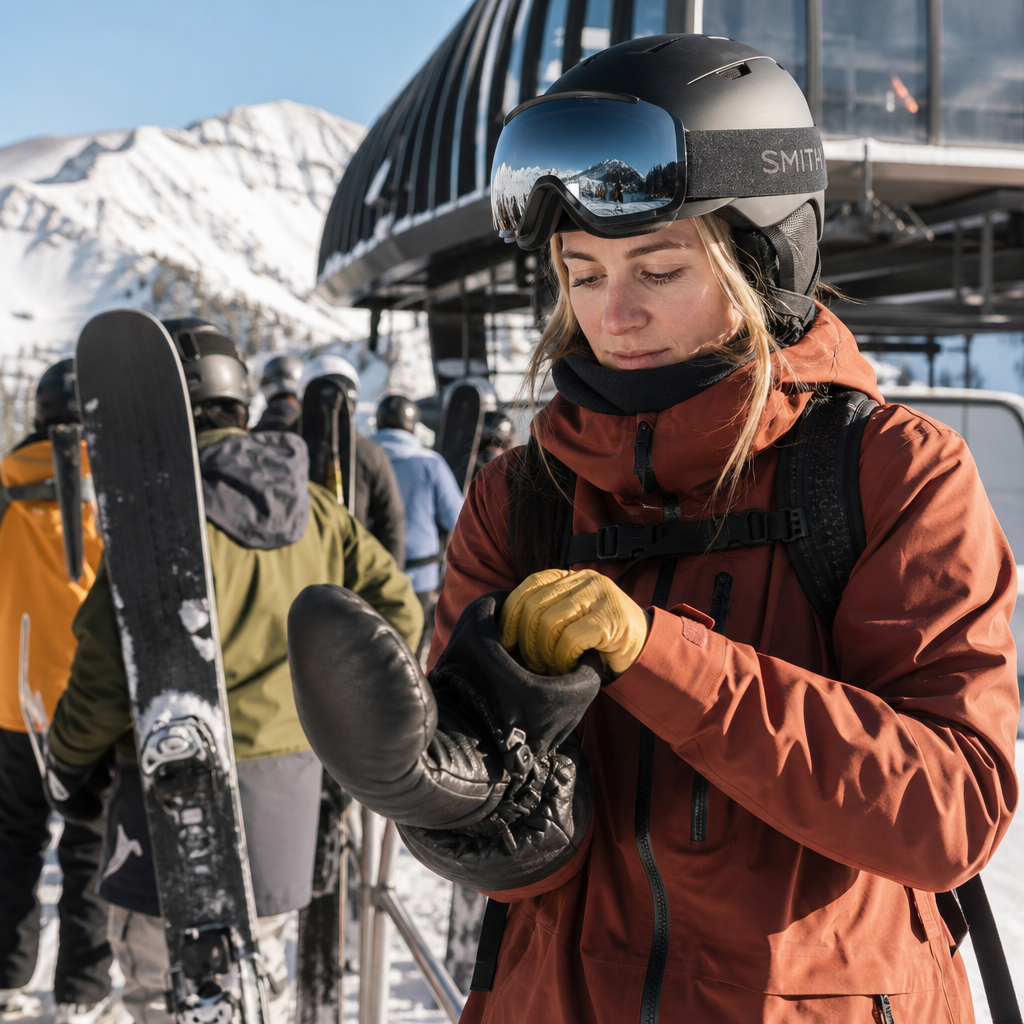
Pick based on how cold your hands run.
• Insulated mittens are always warmer than gloves.
• Bring a backup pair of gloves—one always gets wet.
• Toss in a box of hand warmers for early-morning chairlifts.
Helmet + Goggles
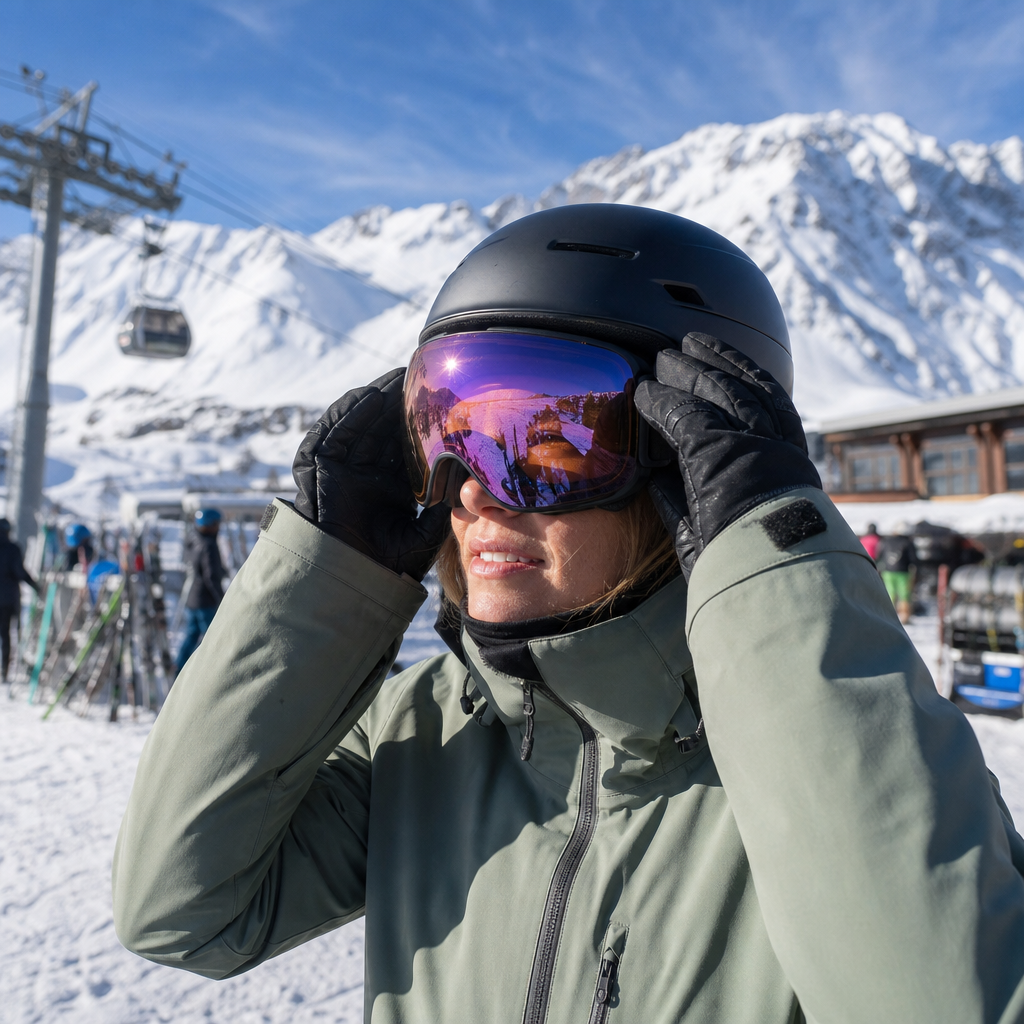
Safety and visibility first.
• A good snow-rated helmet is non-negotiable.
• Pack ski goggles with interchangeable lenses so you’re ready for bluebird or storm days.
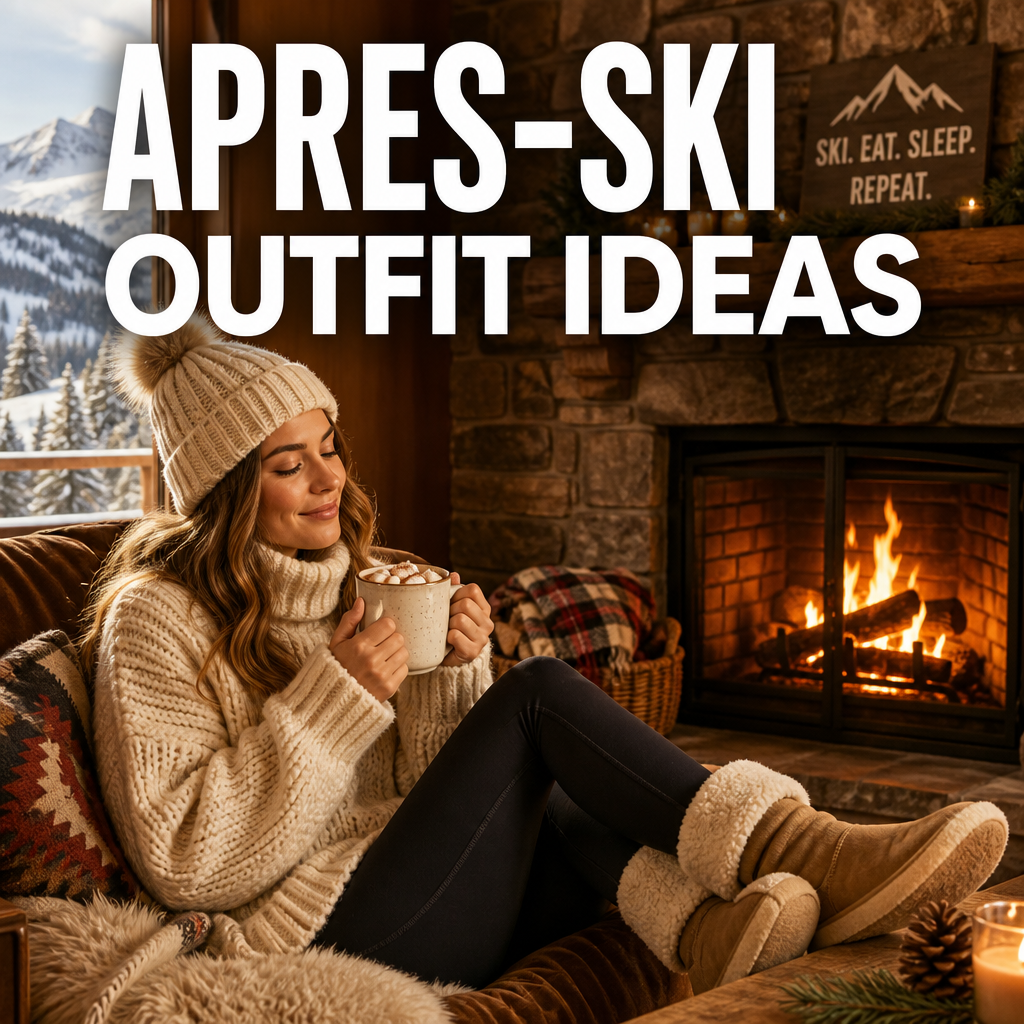
Après-Ski Essentials
Après is its own sport around here—Chris and I have a whole routine of trading ski boots for something cozy the second we’re off the mountain. Pack warm, cute, comfortable pieces that transition from mountain to lodge.
Cozy Sweaters
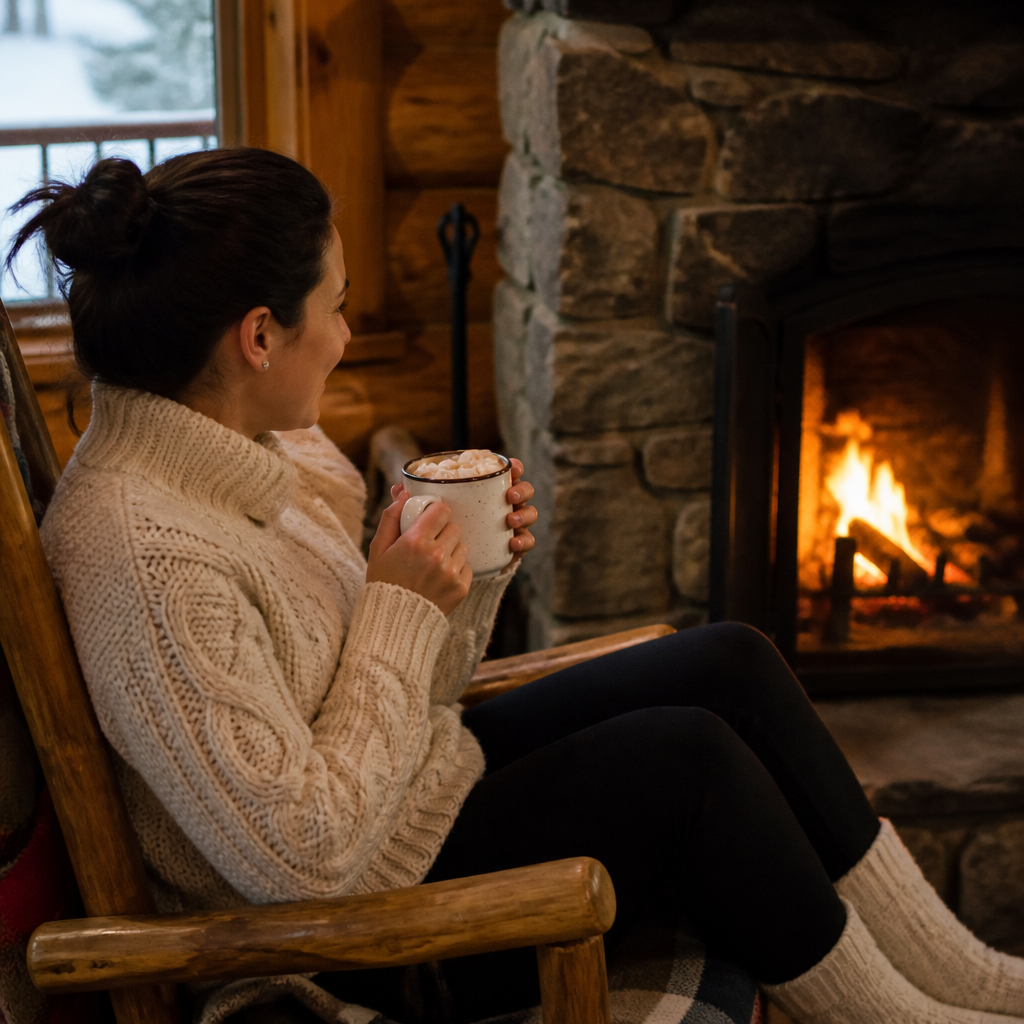
Go for chunky knits or Nordic-pattern pullovers that say “I earned this drink.” I own more of these than I’ll admit to.
Wool or cashmere-blend sweaters keep you warm without overheating indoors.
Leggings or Fleece-Lined Tights
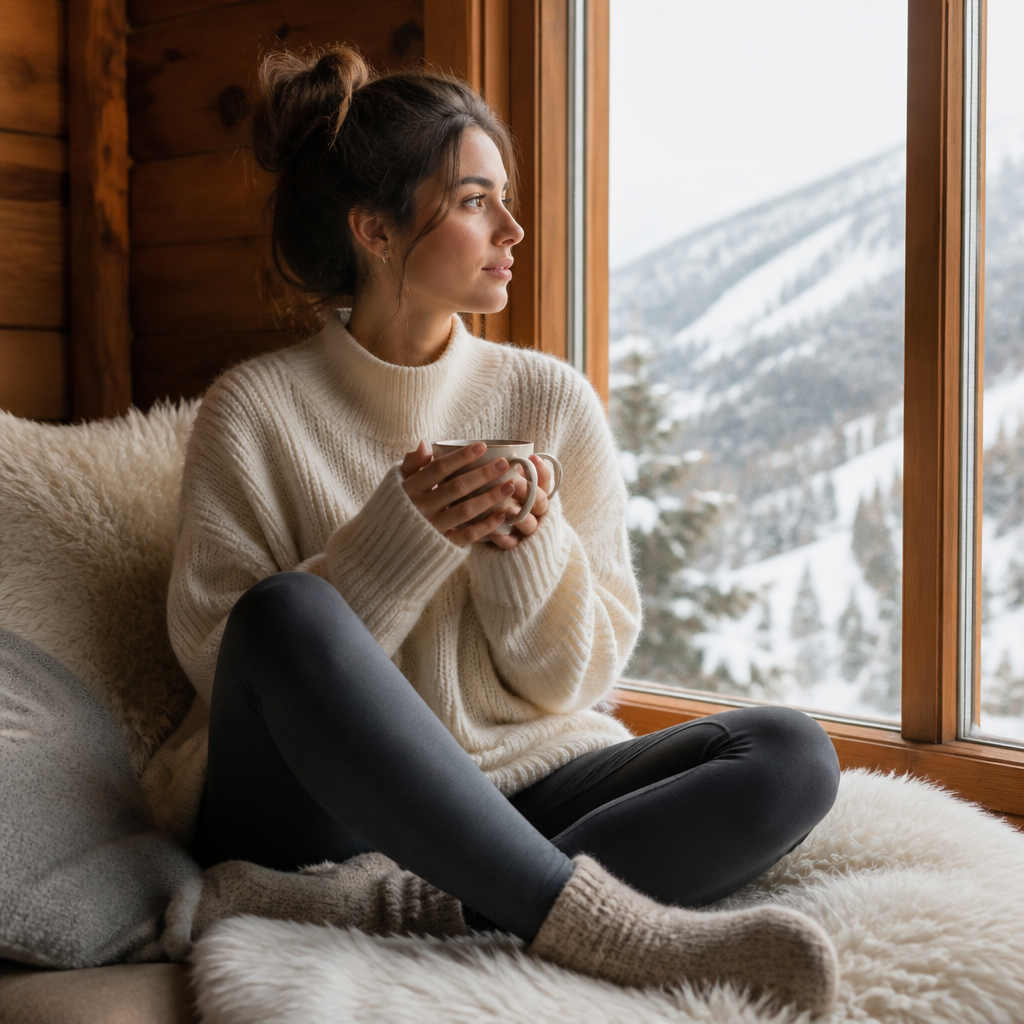
Slip easily under oversized sweaters.
• Fleece-lined leggings make cold patios doable.
Casual Boots
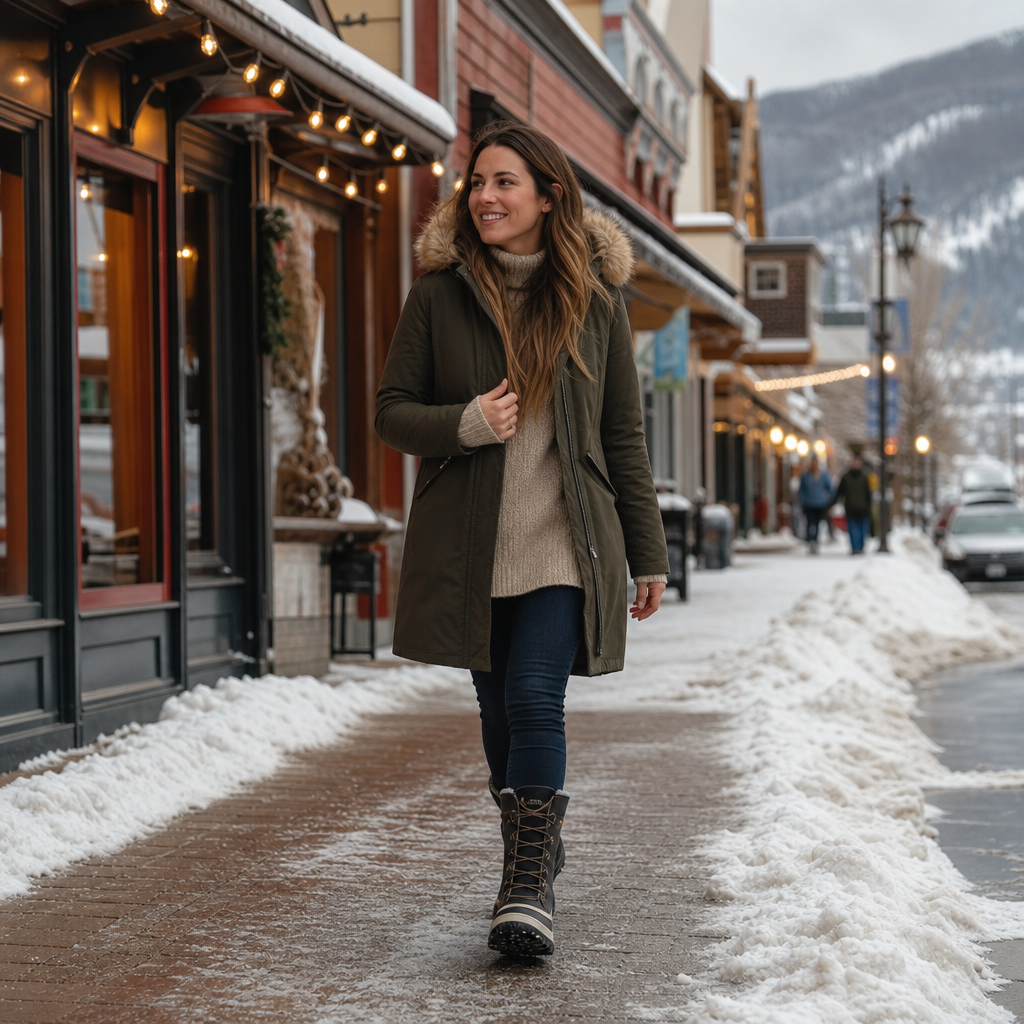
Skip delicate suede. Choose waterproof winter boots with traction.
Outerwear
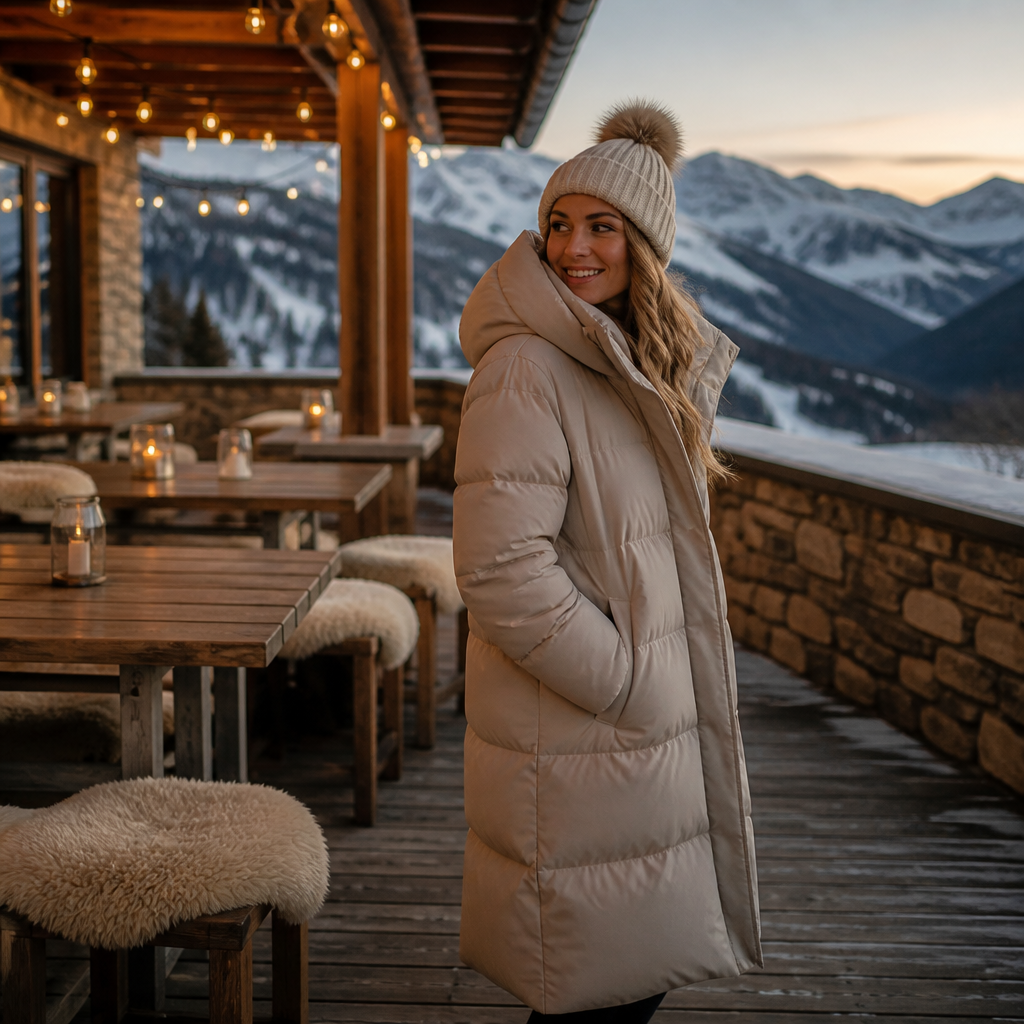
For lodge patios, a long puffer, sherpa coat, or oversized parka in neutral tones works with everything.
Accessories

• Beanie to hide ski hair.
• Polarized sunglasses—snow glare is brutal.
• Crossbody bag so your hands stay free for hot drinks.
Casual Mountain-Town Outfits
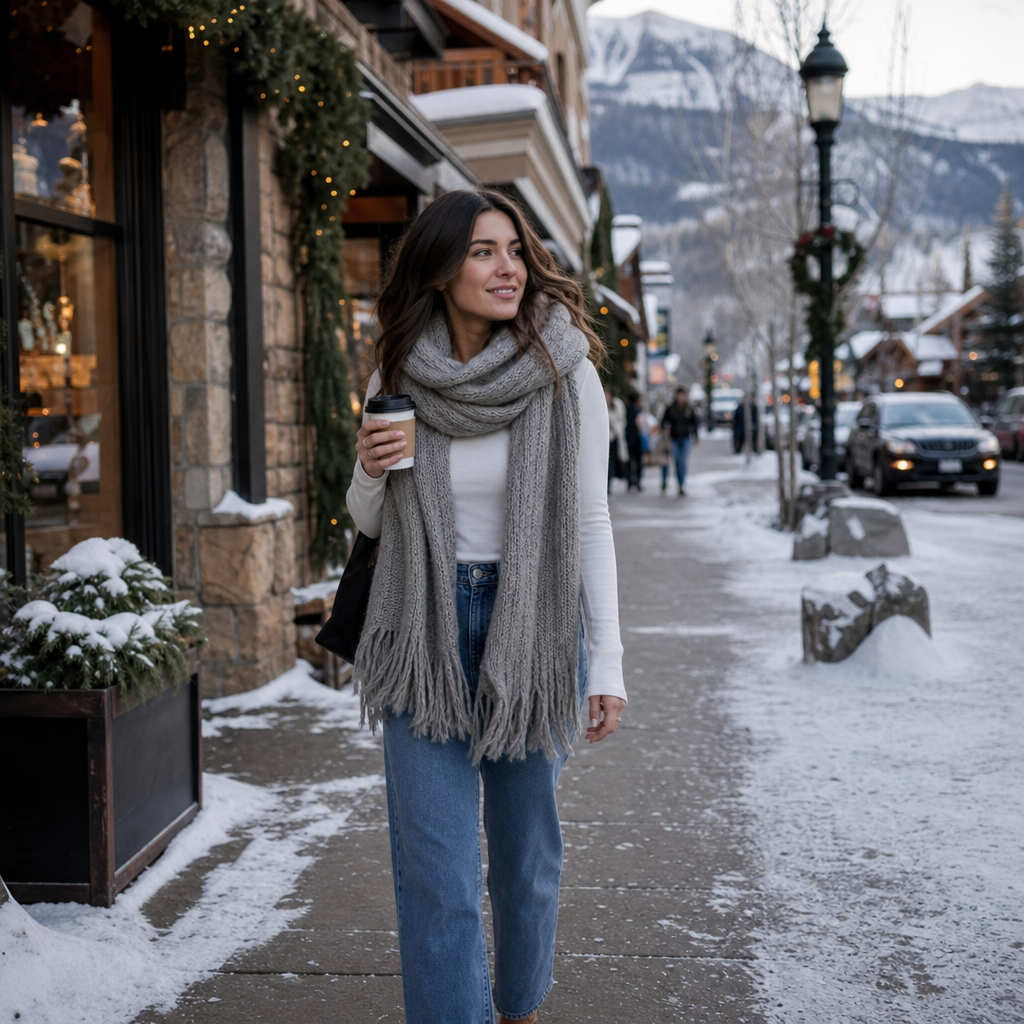
For wandering through town, brunch, or grocery runs—this is basically what I wear on any given day between showings.
• Straight-leg jeans or fleece-lined jeggings.
• Thermal long-sleeve tops or cotton-blend henleys.
• Oversized scarves that double as blankets.
• Puffer vests for mild afternoons.
• Waterproof Chelsea boots with grippy soles.
• Touchscreen gloves for hands-on content creation.
Evening Outfits for Dinner & Drinks
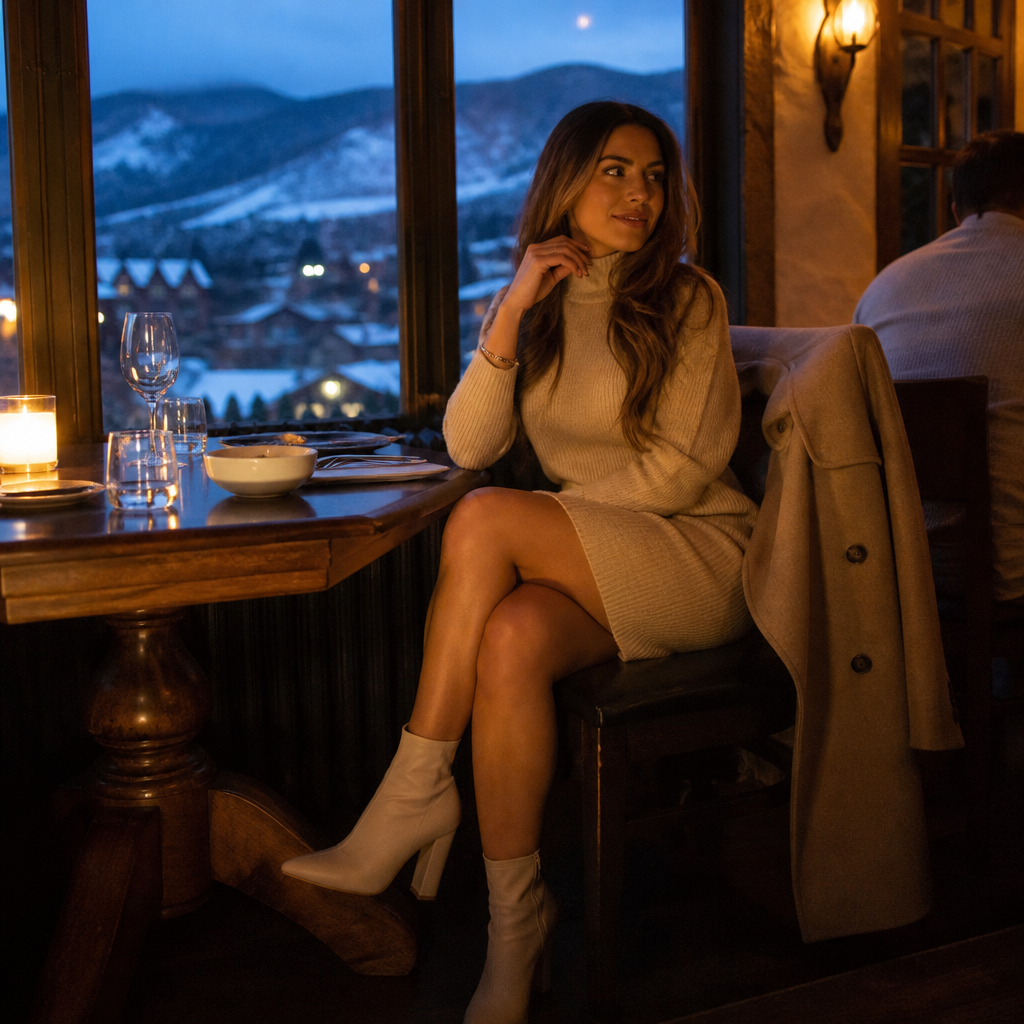
Mountain towns lean “polished winter casual.”
• Sweater dresses with tights and boots.
• Fitted turtlenecks paired with jeans or faux-leather leggings.
• Top it with a wool coat or dressy puffer.
• Choose block-heel boots or anything with a lug sole for icy streets.
Accessories That Make a Big Difference
Small items, big comfort.
• Lip balm with SPF – winter sun and wind are brutal.
• Mineral sunscreen – UV is stronger at altitude.
• Travel-size humidifier – hotel air is dry.
• Rich facial moisturizer for extra hydration.
• Packable tote for layers or snacks.
• Portable charger – cold drains phone batteries fast.
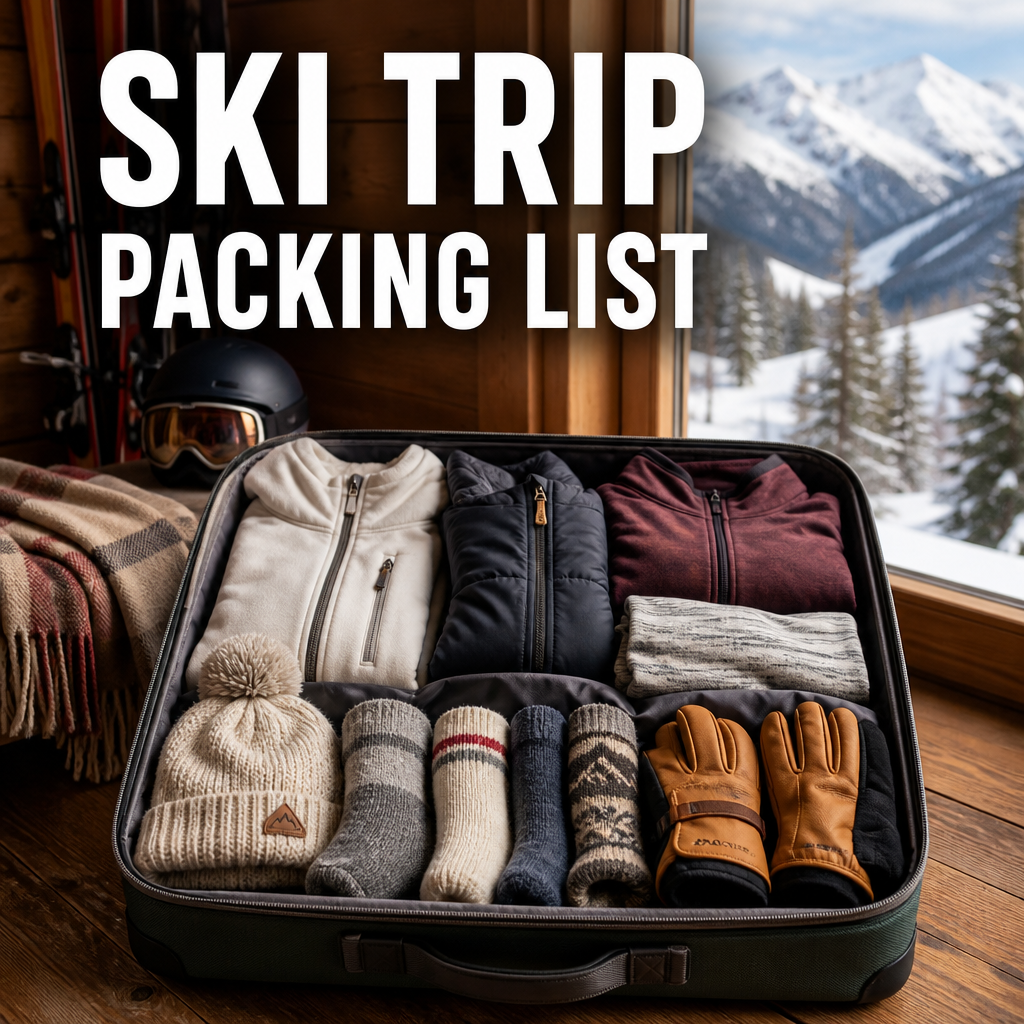
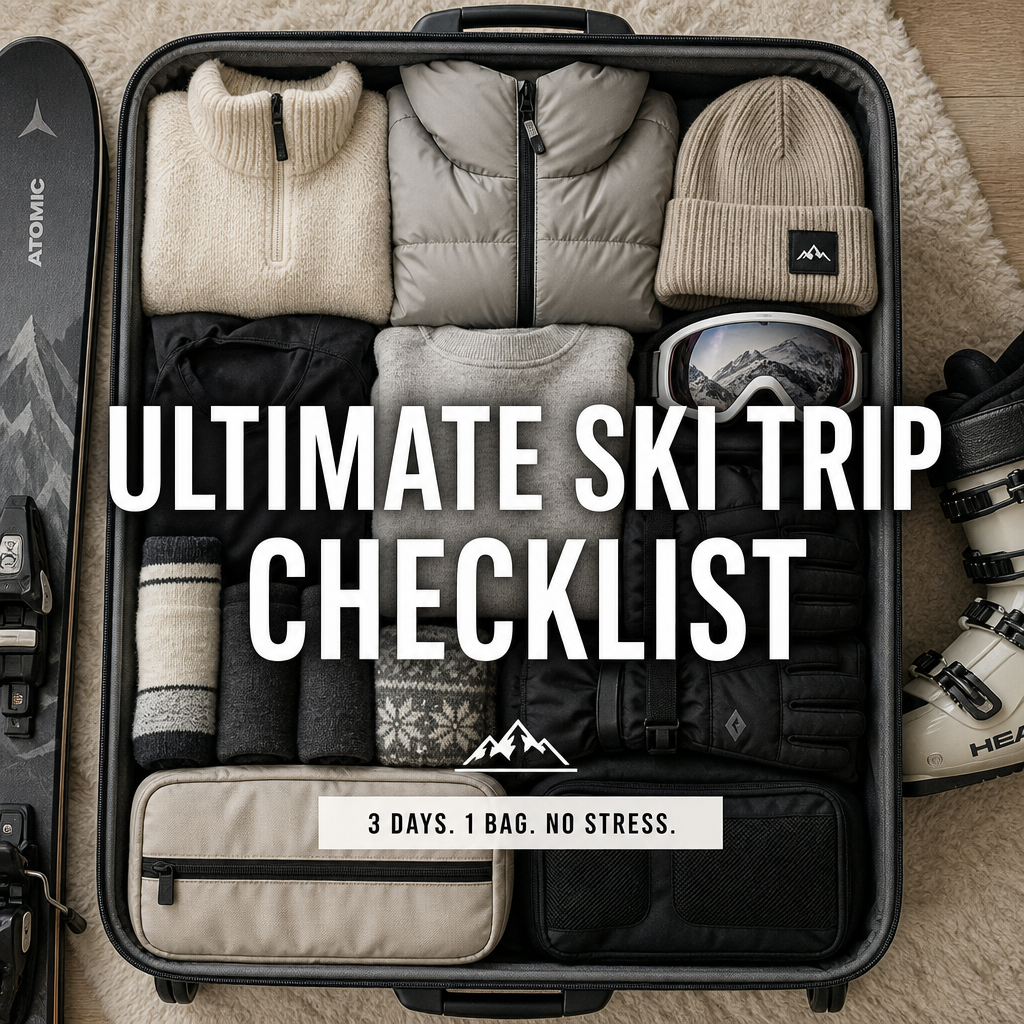
Sample 3-Day Ski Trip Packing List
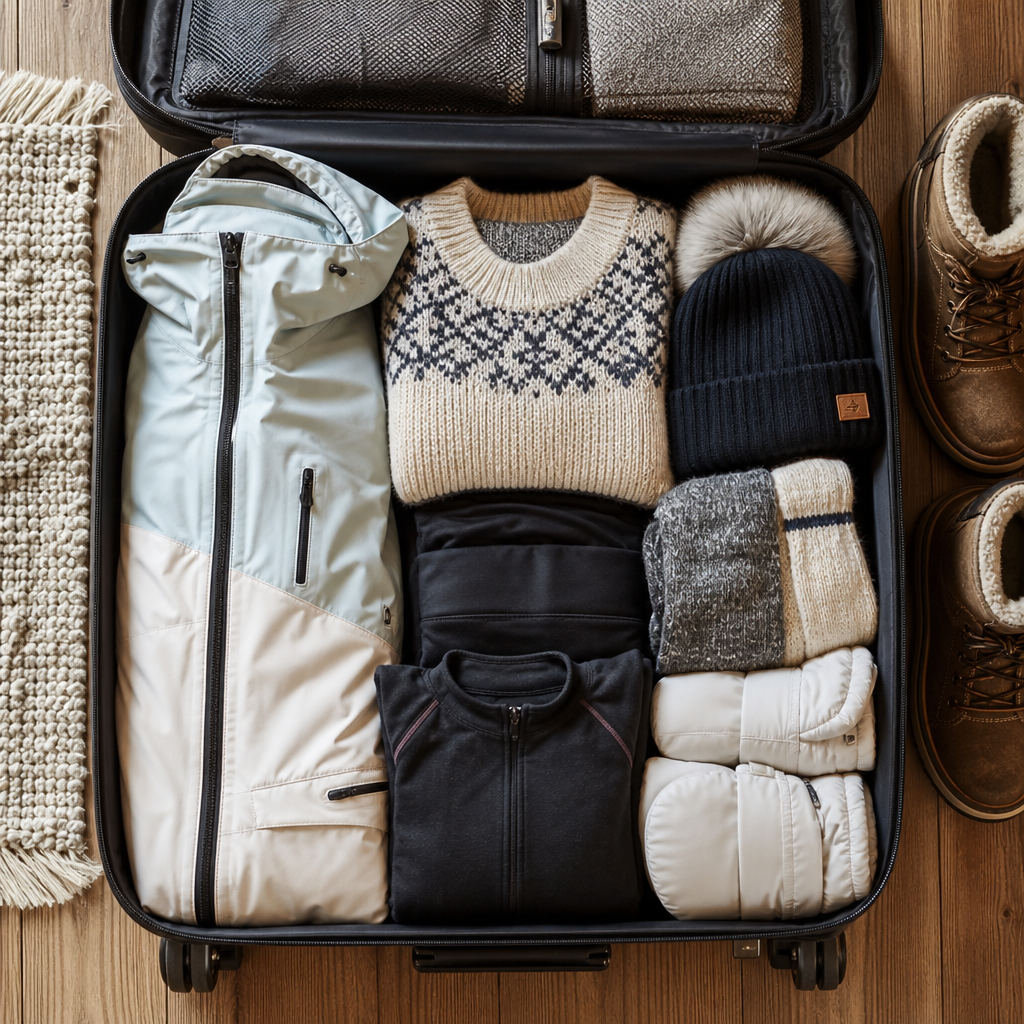
Ski Gear
• Ski jacket
• Ski pants or bibs
• 2 base-layer tops
• 2 base-layer bottoms
• 2 mid layers
• Ski socks (one per day)
• Gloves or mittens
• Neck gaiter
• Helmet
• Goggles
• Hand & toe warmers
Après + Town Wear
• Cozy sweaters (2)
• Long puffer or sherpa coat
• Leggings
• Jeans or fleece-lined pants
• Lounge set
• Waterproof boots
• Beanies (2)
• Scarf
• Crossbody bag
Evening Outfits
• Sweater dress or nicer top
• Faux-leather leggings or jeans
• Wool coat
• Dressier boots
Extras
• Lip balm
• Sunscreen
• Moisturizer
• Humidifier
• Tote bag
• Pajamas
• Phone charger + portable battery
Pack Less, Layer Smarter
Smart layering beats an overstuffed suitcase every time. When your clothing works together, you stay warm without feeling bulky, and you actually wear everything you brought. Pick pieces that can mix and match easily, choose fabrics that work with the weather, and remember that the mountains reward practicality. After 20-plus ski seasons up here, this list is basically muscle memory for me now—I hope it saves you some guesswork on your next trip.
XO, Heather
📌 Save This to Pinterest!
Loved this list? Pin one of these below so you can find it again when you’re packing for your next trip!